Friday, January 28, 2005

Intervista con Angelo Manzotti
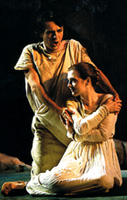
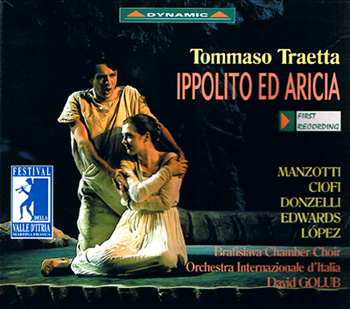
Il sopranista Angelo Manzotti si dedica da tempo alla riscoperta del repertorio storico dei castrati. In questo suo difficile compito, nel 1999, interpretò nell'occasione del 25º Festival della Valle d'Itria, il ruolo di Ippolito nell'Ippolito e Aricia di Traetta.
Il Maestro Manzotti ha perfezionato, con un lungo periodo di allenamento, cominciato autonomamente all’età di dodici anni, una particolare tecnica di canto che gli permette di approssimarsi notevolmente alla maniera di cantare dei castrati, tanto da essere definito da molti il Nuovo Farinelli. Con la sua voce eccezionale ha vinto il Concorso internazionale Luciano Pavarotti nel 1992 e il Premio Timbre de Platine per la sua prima registrazione del CD Arie di Farinelli editato da Bongiovanni nel 1995.

Gianfranco Spada: Lei interpretò Ippolito nel 25º Festival della Valle d'Itria, come fu il suo approccio con la musica di Traetta?
Angelo Manzotti: La musica di Traetta era bellissima e di una modernità notevole. Il mio approccio si è basato sull’avvicinarmi con umiltà per studiare una parte tanto complessa. Le problematiche di carattere belcantistico erano evidenti fin da un primo sguardo e lo studio del fraseggio, della linea del canto mi hanno messo in difficoltà per ricercare colori adatti e per dare un senso appropriato alle frasi musicali. Il ruolo infatti non prevede i classici passaggi vocalizzati del barocco, nelle arie c’è una ricerca della “verità” drammatica che esula spesso dai modi convenzionali del belcanto tipico dell’epoca. Il linguaggio musicale di Traetta si può considerare molto moderno per quel periodo (sembra Mozart ben prima di Mozart); è un canto tutto sul fiato, fatto di dinamiche sfumate e di direzione del fraseggio, quindi non ci dovevano essere sbavature di alcun genere (non so se questo mi è riuscito, ma ci ho messo la mia volontà perché ciò non accadesse)

Quali difficoltà comporta il ruolo di Ippolito, che il castrato Filippo Elisi aveva interpretato per la prima volta?
Le maggiori difficoltà sono legate alla tessitura eccessivamente acuta, infatti alcune cose mi sono state adattate, come in fondo si è sempre fatto anche in passato, dato che si scriveva per un determinato cantante e pertanto si assecondavano nella scrittura musicale le caratteristiche vocali di questo; il ruolo prevede infatti due arie in tessitura da soprano lirico-leggero mentre la seconda aria ha una drammaticità da soprano lirico spinto. Inoltre bisognava rendere la soavità legata alla purezza del personaggio, alla sua dolcezza, evitando di eccedere quindi con bordate di suono, tranne che per gli acuti estremi e per la sola aria drammatica del terzo atto.
Insomma, un ruolo non facile.
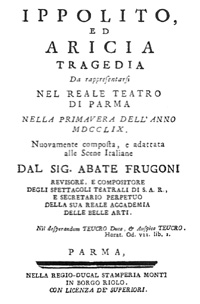
Che ricorda di quell'interpretazione di Ippólito della Valle d'Itria?
Circa l’interpretazione ricordo i contrasti tra regista, che voleva Ippolito dolce e delicato come una porcellana e il costumista che mi avrebbe visto come un macho culturista tutto muscoli (che io non posseggo). Naturalmente il regista ha avuto la meglio e questa visione del personaggio è molto più congrua con la musica di Traetta. Ricordo l’emozione della supplica al padre nella mia ultima aria, quando la mia mano si univa alla sua e l’emozione era nei nostri sguardi: credevamo in quella musica e in ciò che stavamo vivendo (e non solo cantando... che sarebbe riduttivo). Un Ippolito tutto infelicità e tormento.
Ricordo anche (purtroppo) il gelo terribile di quelle serate. Il tempo inclemente non ci ha aiutati e la bellissima Puglia in piena estate chi ha letteralmente congelati. Alla seconda recita si vedeva il fiato di noi cantanti a causa del freddo,ed è stato un problema per tutti (ci siamo ammalati...)

Secondo lei, quale può essere la spiegazione che un compositore come Traetta, per molti il "riformatore del melodramma" probabilmente prima di Gluck, e precursore in qualche modo dello stesso Mozart, sia caduto nel dimenticatoio?
Da sempre succede così, non c’è più da stupirsi. Quanti “talenti” discutibili e mediocri vengono idolatrati, semplicemente perché spinti e sostenuti dallo star system o da altre ragioni poco chiare? ( e poco oneste!!!!) Tutt’oggi chi non ha santi in paradiso, pur avendo talento e capacità soccombe e assistiamo al trionfo di artisti mediocri ma ben sponsorizzati. Forse anche a Traetta è stata riservata questa sorte: nulla è nuovo sotto il sole e così, qualcuno meno capace ma molto più sostenuto sotto molti aspetti ha assunto un ruolo che poteva benissimo essere di Traetta e che probabilmente Lui meritava. Non sempre c’è una giustizia che ripaga nella storia, e Traetta è caduto così in oblio. Forse c’era un grande interesse nel sostenere il noioso Gluck e costui aveva appoggi molto più potenti per farsi definire riformatore del melodramma e assurgere a una gloria che avrebbe potuto benissimo essere d’altri...

Dove marca lei la frontiera tra Traetta e Mozart?
La domanda per me è troppo complessa e non ho le competenze musicologiche per rispondere con cognizione di causa. Penso solo all’inizio della sinfonia dell’Ippolito e Aricia e... mi ricorda quella del Flauto magico: ma quest’ultimo non è stato scritto dopo?... Dov’è il confine? Mozart è un genio sicuramente, però ha indubbiamente attinto molto da Traetta, da Luchesi (altro grande dimenticato e molto scopiazzato) e da altri venuti prima di lui. Comunque la domanda esula dalle mie possibilità di conoscenza e così mi fermo qui.

Quale personaggio delle opere composte da Traetta le piacerebbe poter interpretare se si rappresentasse nuovamente?
Non posso dire di conoscere tutto il repertorio operistico di Traetta; comunque nelle 26 opere serie che ha scritto penso ci siano altri ruoli per evirati cantori e se i ruoli sono come quelli dell’Ippolito e Aricia sarebbe interessante poterli avvicinare e studiare. Tutto quindi mi piacerebbe: dai Tindaridi alla Ifigenia in Tauride, dall’Antigone alla Sofonisba, all’Armida.

Lei, con la sua voce incredibile, evoca un’epoca in cui i castrati provocavano il delirio di chi assisteva alle rappresentazioni, infatti potevano passare dalla tessitura di voce di una soprano a quella di un tenore in una sola nota. Come vivono oggi giorno gli spettatori la tendenza a riscoprire un modo di cantare che era stato sostituito da voci femminili?
Gli spettatori vivono benissimo questa cosa, non se ne stupiscono e anzi, vi sono gruppi di sostenitori di queste voci che seguono noi cantanti con affetto e partecipazione. La cosa è vissuta meno bene dalle direzioni artistiche che sono spesso prevenute e che così non danno molto spazio a queste voci (almeno in Italia è così)

Qual é la migliore definizione della sua voce?
Non saprei, e forse non spetta a me dare tale definizione. Io posso solo dire che amo pensare che il canto sia una cosa che parte dall’anima, dal cuore, poi metto il cervello (cioè la tecnica) e in fondo la voce. La mia voce è il mio cuore.

Alcuni critici le hanno definito il Nuovo Farinelli, che le è sembrato il Farinelli cinematografico di Gerard Corbiau?
La parte musicale del film non è male; scenografia e costumi belli, ma il film è una banale invenzione per fare cassetta e di Farinelli, quello vero, c’è ben poco. Non mi è piaciuto molto, però è servito a fare pubblicità al personaggio Farinelli e qualcuno si è così chiesto chi era costui. Diciamo che questo film ha avuto una sua utilità, anche se per conto mio Farinelli lo ricerco nelle biografie serie, nella corrispondenza con Metastasio e nella sua musica.

Maestro Manzotti, la sua vita é ricca di aneddoti come quella di Farinelli?
No, assolutamente. La mia è una vita semplice e tranquilla. Vivo nella quiete della campagna mantovana, studio, seguo il mio giardino, seguo mia madre che è anziana, cucino... e canto. E’ ovvio che qualche aneddoto simpatico c’è: girando e incontrando gente succede, ma nulla di eclatante o significativo. Insomma, una vita tranquilla e a volte un po’ noiosa, fatta spesso di solitudine pacata e quieta.

Attualmente, una parte della critica rifiuta a priori che sopranisti o contratenori, per molti gli eredi dei castrati, interpretino ruoli scritti per questi. Che opinione le produce questo rifiuto?
I preconcetti son sempre esistiti, un po’ come i raccomandati citati prima. Comunque da molto io canto solo per il pubblico, dei critici mi importa ben poco e per loro ho smesso di cantare già da un pezzo. Se non ci fosse la gente che segue, ascolta, ama, io non esisterei, quindi per loro canto. Il pubblico si vuole emozionare e io sono lì per dare ciò che ho dentro, ciò che sento. In quanto ai critici e alle loro prevenzioni non so che dire. Li lascio parlare e il tempo farà il resto. Ci sono recensioni degli anni ’50 che parlano malissimo di una certa Maria Callas: lei è una grande e lo rimarrà nel tempo... e nessuno ricorda il nome di quei critici.

Ha avuto occasione di ascoltare le registrazioni del Moreschi, l'ultimo castrato? Che ne pensa?
Le registrazioni risalgono al 1902/1904 e la qualità non aiuta. La voce può sembrare strana, ma di tanto in tanto, qualche nota non priva di fascino esce da quella registrazione e impressiona molto, trasporta in un’altra dimensione. Con molte riserve, ma quel disco mi affascina.

Quali sono i suoi progetti per il prossimo futuro?
Per ora concerti e forse un’opera in prima assoluta, ma preferisco non parlare di questo, perdonatemi.

Quali sono i suoi cinque link preferiti in Internet che raccomanderebbe ai nostri lettori?
Io sono letteralmente un “brocco” del computer e quindi non lo uso molto, perciò mi risulta difficile dire quali sono. Ne posso citare uno che rende un grande servigio al talento di Haendel:
www.haendel.it

Per terminare, tra i dischi che lei ha registrato quale consiglia ai nostri lettori?
Io non amo molto le mie registrazioni, però qualcosa non mi spiace. Consiglio il Cd con Arie di Rossini (autore che io amo infinitamente) edito da Bongiovanni e poi, per chi li trova, i miei Cd dal vivo che a volte vengono venduti durante i miei concerti: sono tra le cose più belle che ho fatto e danno un’idea reale di quelle che sono le mie possibilità dal vivo, e dell’interazione tra cantante e pubblico. Sono registrazioni un po’ artigianali, ma ringrazio chi le ha fatte e penso che in esse vi siano molte cose apprezzabili.

Gianfranco Spada, ©Traetta.com
Approfondimenti:
Cd registrato in occasione del 25º Festival della Valle d'Itria, nel 1999
Tuesday, January 04, 2005

Interwiev with Antigona director Éric Vigner

Penny Martin:Your association with experimental theatre perhaps makes your choice to undertake the more traditional field of opera a surprising one: particularly the opera seria genre. What interested you in the Antigona project?
Éric Vigner: Antigone is a distinctive work; it was written and composed for Catherine the Second of Russia, the great patron of art and artists. At the time it was intended to be a contemporary work. This Antigone is remarkable because it ends with the marriage of Hémon and Antigone following the pardon given by Créon to his son, who had wanted to join Antigone in her cave and die with her. For Antigone this pardon is not acceptable because it goes against her own plan which is to put an end to the incest and join her two brothers in death. This is what Traetta's music makes you experience. Antigone here is a woman, a sister who takes the law into her own hands to achieve her secret and personal project to finish with the world so that something elsewhere can be reborn differently.

We're in the universe of the cosmos and metaphysics. The visual universe which we have constructed is a universe of cold ashes, the dust of stars, a black hole where one knows only too well whether it's the beginning or the end of the light.

What would remain if the world ended up dissolving in space and if, in another time, one rediscovered these fragments of the same signs scattered everywhere? What meaning would those logos have, that we see everywhere on sports clothes, the brands of the big global, industrial and commercial enterprises, the logos of Nike or Nestlé?

The black and white colour scheme imposed itself straight away as well as a form of abstraction in the sense where you can no longer tell what the images or fragments of signs might originally have represented. The only wavering and persistant colour had to be that of the skin of the singers and actors, as if drained of blood. In our interpretation the Antigone project was a terrorist project; secretly and with an extreme elegance, she was silently going to put an end the world. The violent reaction of some of the audience to the design derived from this initial concept. It could no longer recognise itself in these signs that were put forward and attempted to find a known system of reference. However the work was open in the sense that it resonates or creates an echo for individual interpretation. A talented and respected journalist wrote that there was nothing to see and tried in vain to attach to this work a number of references which we hadn't inscribed in the initial concept. Our work was to bring the music to the fore.

How did your relationship with the conductor Christophe Rousset begin?
Christophe Rousset saw my theatre work and liked it. For a long time I resisted the offers to do opera and then finally in 2000 we did Didone by Cavalli at the Lausanne Opera and l'Empio Punito at the Bach festival in Leipzig.

What made you select the art directors M/M (Paris) to work with you on the set and costume design?
I've been directing a theatre since 1996 and we've worked together since the beginning. They create all the visual material, posters, fliers etc. We know eacho ther and we appreciate each other. Most often I design the theatre and opera spaces myself but I told Mathias and Michael about my plans for Antigone and they immediately came up with a design that corresponded with what I was looking for. I thought it was also interesting to introduce the work of contemporary artists into the field of opera.

How did you initiate your ideas for the production?
The overall plan came about after reading the libretto and listening to the music. Christophe Rousset had already recorded the music which allowed for greater precision in terms of the direction. It was necessary to speak of the world today at the beginning of the twenty first century and to get beyond the story of a young girl who wants to bury her brother.

Can you describe the working dynamic between director, conductor and set designers. Who does what?
It was Christophe Rousset's suggestion to do Antigone. In opera, the director is also the artistic director in everything that concerns the dramatic art, the aesthetics and the theatre direction of the singers, which he does in agreement with the conductor. He's an author of sorts as well as the coordinator of other contributors. It's the director that chooses the set designer, the wardrobe master, the lighting engineer. The conductor is responsible for the music; he directs the orchestra and chooses the singers.

Did you encounter any resistance to such a stark approach to the art direction of what was originally a highly ornate production by today's standards?
We encountered lots of resistance and the concept was not always understood by the audience or certain actors. The perception was often divided in terms of the beautiful or the ugly with a particular attention given to the costumes, which were generally described as very ugly. Paradoxically however references were made to the big French fashion designers like Courrèges - no doubt because of the black and white - and Chanel. The costumes were created by Paul Quenson who I've worked with for the last four years and who began as a fashion designer. He also works for Hermès and Prada. What wasn't understood is that the aesthetic was only referring to itself and that the opera took place in the universe of M/M. That is to say in their work applied to this Antigone. We're very far from the standard norms of the arts.

What is it like to see a condensed version of your total work in the film?
This film is in total agreement with the initial project; it explains, it tells the story and it shows the atmosphere perhaps more even more precisely than what we tried to achieve with the production itself. I would say even that it's an extension of this work and is a part of its success. It's another way of prolonging this artistic adventure. In our work with M/M the process is as interesting as the final object itself and our collaboration on this project is a moment in the history of our work since 1996.

Was the experience of Antigona a good one for you: would you undertake another opera?
It was an enriching experience and it's a basis from which one can work. I would like to continue to work with opera.

Penny Martin
Translation: Isabel Best

Interview - Antigona: conducter, Christophe Rousset

Penny Martin: This staging of Antigona has been discussed in terms of a renewed interest or 'revival' of its composer Tommaso Traetta. Can you say what which aspects of his work have contemporary appeal?
Christophe Rousset: Traetta, like many other Neapolitan composers, had a peculiar genius for melody, a dazzling dramatic sense, and a remarkable palette in his orchestration. It makes Antigona especially attractive.The aspect that is probably more convincing for contemporary audience is the theme of Antigona: a young lady is fighting against power, illegality and political abuse.

How does the opera seria genre, which is more consistent with Baroque aesthetics, balance with Traetta's commitment to reform ideals in opera, which one might associate with the Enlightenment?
Antigona is clearly reformed. In comparison with Ifigenia created in Vienna a few years earlier, Antigona is looking towards the future and announces Idomeneo for instance. It is more fluid, using more ensembles, mixing choruses with solo singing, abandoning almost completely Da Capo forms; intensifying the use of accompagnato, Antigona innovates. Written for Catherine II in St Petersburg, illustrating the 'enlighted' king, the opera is certainly a tribute to the general courant of philosophy in Europe.

In M/M's film version of your opera, the title cards state that Antigona is set in a 2000 AD context of religious violence and social corruption, which might be read as a metaphor for the current political climate. Is this relevant to you?
I didn't choose that vision but I quite agree. There is a strong parallel to find between Thebes of Oedipus and our sinking world.

Would you describe your motivations behind the way you approached Traetta's original version.
I like discovering forgotten, sleeping beauties. I knew Traetta's work was very high level. Antigona is considered as his masterpiece. The subject of the libretto decided me to recreate this opera.

Sophocles' original tragedy of Antigone ends in tragedy, with the heroine choosing to die, rather than accepting the new King of Thebes' decree that the former king?her brother Polynices?may not be buried since he led an attack against Thebes. Although Traetta proposed a happy ending, where Antigone lives and marries the King's son Haemon, you chose the more tragic ending. Why?
The music and the libretto remain untouched, so you could still believe in a happy ending. The "Happy End" tradition in opera seria was getting less and less observed. Again, it was to serve the image Catherine II was trying to give of herself that this opera ends with a marriage. The turning point between Tragedy and final Feast is so abrupt that the Stage director Éric Vigner couldn't take it as credible. Antigona has lost her two brothers, has fought with her uncle and was condemned to death in the same day. How could she possibly believe she could marry at the end of the same day?

Some opera historians have suggested that the expressive heights reached in Antigone were owed in part to the availability of the contemporary soprano Caterina Gabrielli. Please describe how you went about casting this version and your reasons for this particular cast.
It's true Gabrieli was a star, singing well but also being an amazing tragedian. She was a lover of Gluck and Traetta, inspiring their compositions. All the best theatres in Europe hired her, so we had to find a very strong personality to defend this role, because it's difficult to sing: Antigona is there on stage more than the half of the time. It also requires a dramatic intensity you rarely find with a 'regular' soprano! Maria Bayo had all these aspects in one, except that she was pregnant!

How did your creative partnership with Éric Vigner originate?
Antigona is actually our third collaboration. I met Eric in our 20s; he was still an actor and once I saw his work as director of plays I knew he would be very convincing in opera. He is very operatic now in his staging of plays and has given opera in general a new direction that probably a lot of stage directors will take in the future.

What made you choose M/M (Paris) as collaborators on Antigone?
M/M was Eric's choice, I didn't meet them before the scenery was built. The image was very strong and I liked it right away, although it was rather obsessive.

The appearance of M/M's art direction evokes Modernist film and design: almost the antithesis of Baroque art. How do you feel about such an audacious visual statement?
I would say it's not antithetical. It's strong, significant and has its Baroque aspects. Audacious, yes, like Antigona was audacious in the 18th century.

A film edit of an opera is intrinsically a compromise for its conductor, it being a truncated version of their original vision. How did it feel to watch 'Antigona Under Hypnosis'?
I think it kept all the dark aspects of the drama, a hopeless world. I had the feeling of watching a movie of the 30s, which connects perfectly with St Petersburg, don't you think? It's an aesthetic gesture that had to be kept in memory and having filmed it is, I think, a good thing. It would be interesting to watch this film in ten years and see if these aesthetics really will have a future...

Penny Martin

Interview with Antigona Art Directors, Michael Amzalag & Mathias Augustyniak of M/M (Paris)

Penny Martin: Had you worked in opera before?
M/M: We've been working with Éric Vigner for almost ten years. He had been appointed as the director of the CDDB - Théâtre de Lorient; a tiny theatre in Brittany. It was in the mid '90s, when the Ministry of Culture had decided to place a younger generation of directors in these kinds of places to encourage creation. Theatres were made more lively and this was one of them. Éric had seen a business card that we had designed. So he came up to meet us and said 'I'm going to try and initiate some projects with you.' The rules were that we should all feel free. It was not like being asked to do a communications project. Éric said, 'If I'm going to do creation. Then you should do creation too'. So every time they staged a new play, we were asked to do a poster but not like an illustration of what would happen on stage, more like our version of the text.

Had Éric worked with opera before?
Since he had become a prominent director in France, he was approached several times by this conductor Christophe Rousset, to work on some operas. He had done a couple before, like La Didone and L'Empio Punito. Then last year Christophe asked Éric to create the scenography for Antigone. Our relationship with Éric had developed to the extent that he invited us to take part in the project. He said, 'ok, maybe it's now time for you to move on and come on stage'. Previously, we'd been working outside of the theatre.

The Antigone myth might be read as having relevance to contemporary events. Does it have any ideological importance for you?
What interests us in the story of Antigone is that it contains everything. It is kind of a psychoanalytic matrix. It can be read from many directions: from the Freudian point of view on Oedipus; in terms of a woman standing against the Law as per Judith Buter's writings, etc. It's a pile of stories that have been played and discussed again and again. That's why the stages were all constructed from the same complex image. For us, that's a metaphor for Antigone: it's always the same story and it can be viewed in many different ways.

Can you describe the working dynamic between you, Éric and Christophe?
We know each other's space. Eric invited us to do something for the set, allowed us some time and then we showed him some models of the set. They were obviously very directive, but this was part of the working situation that had preceded the project. We didn't speak about any visual references together. Those more came from us. He's very generous. He said 'right, you've given me a toy box, now I'm going to play in it.'

Were you at all anxious about turning your design into 3-D terms; architecture, almost?
For us, it was interesting because the set combined many elements that came from other contexts: for instance, the carpet was originally designed for the café (Etienne Marcel) in Paris. That carpet mixed a typeface from us with the work of artists Pierre Huyghe and Philippe Parreno. In a similare way, we used in the sets some posters from our 'Alphabet' series that were made together with Inez van Lamsweerde & Vinoodh Matadin. So the work was connected to us and the experiences we have had during other previous projects.

For many other designers, it is important to approach each design problem afresh.
For us, this is a mistake. It's like parentheses in history. The Modernists believed that design was about the message. It had to be transparent and objective. The pretension of objectivity failed for us. For our generation, it is impossible to pretend that we are soulless. It is interesting how Modernist aesthetics have been reappropriated through post modernity. It became kitsch in a way. If we step back and look at the history of signs, it is clear that being an author, someone who has a point of view, has always endured. We believe in having a point of view and being able to distort the message. Either you do it consciously, or unconsciously, but you do it anyway.
My first interpretation of Antigone Under Hypnosis was that it was a Brechtian staging, but presumably you would refute this if you aim to reject the late Modernist project?
I think what Traetta was trying to achieve through opera seria was to create a more emotional experience. Two hundred or so years later, the whole of opera seems very anachronistic to us. It's a weird thing because opera was about mixing all the artists together, the most elite creators, but now it's becoming like an isolated island. To see all the efforts of a production created for a show that would only play six or seven times made it feel unreal. More extreme than haute couture. So for us, it was like an experiment because we hadn't undertaken such things before. Without any rules to follow or work against, it was like a new landscape. Because we have been creating all these signs, we tried to fill the landscape with these. There are few elements within the set that are original. Most are taken from our previous work.
Decadent. So for us, it was like an experiment because we hadn't undertaken such things before. Without any rules to follow or work against, it was like a new landscape. Because we have been creating all these signs, we tried to fill the landscape with these. There are few elements within the set that are original. They are all taken from our previous work.

Is it important to you that an audience recognises the hallmarks of an M/M product?
It's up to them. The language is becoming more and more complex. The more people look at it, the more they will be able to converse with it.

How does it feel to receive negative reviews, like those of Antigone in the conservative press?
The more serious, conservative opera reviewers all read very obvious references in the production. They all missed the point and focused on art historical allusions, drawn from between 1930 and 49. None of them registered the details or could understand them. Some would say the designs looked like Miro, others said Jean Dubuffet. There was in there elements that are perhaps closer to Hockney's fax art than Dubuffet. But if they want to see that, it's fine. We are just part of a big chain.

Is the development of this internal language an emotional process for you and Mathias?
Obviously yes, but we would rather say that we are not there to provide all the subtexts to what we do.

What is the relevance of the film medium you have used to document Antigone? Is it relevant to read cinematic references into the Antigone Under Hypnosis film?
In the beginning, the film was motivated by selfish concerns. The opera played only six or seven times. But with the film, we can show it for the next ten or fifteen years. Before completing the designs for Antigone, we were asked to do an exhibition about the process of creating the opera. We agreed on the premise that it would be the third part of a trilogy. First we would create the show, the performance would be the second part and then it was nice to something at the end. We thought a film would be the perfect achival medium, since it would contain the experiment. Something to show to more people.
We had done one or two experiments with film before, two music videos, which had both been essentially single takes. This one is composed from four symmetrical takes. Four camera movements to describe the space. They are unconnected to the action on stage. These are very strict rules to follow. All the sequences start and stop at the same point. Except from the last one. The whole set was constructed around one image, zooming in and out and looking at it again and again and again. We tried to exhaust the image. To erode its history.

Is where the film is seen important to you? Do you prefer to view it in an art gallery?
We wouldn't present it in ShowStudio if this was the case.There is no separation for us. The commissions determined the different audiences for Antigone: for the opera and then the exhibition. Many of the aspects of our work that fed into the project were created through commercial projects.

Finally, would you interpret the title of the film, 'Antigone Under Hypnosis'?
Because the camera is very slow and descriptive, you are given the impression that almost nothing is happening. But by the end, after twenty minutes, you have seen a lot, so it's like hypnosis. The experience is somewhere into your brain but you don't really know what happened. Being mesmerised by the image, which is finally exhausted.
Penny Martin

Monday, January 03, 2005

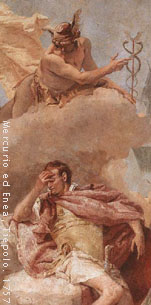
La Pace di Mercurio

«La Pace di Mercurio / Da Cantarsi in Bolgiano / alla Augustissima presenza / Delle loro Maestà Imperiale, e Regia Apostolica / In occasione / de felicissimi Sponsali fra sue Altezze Reali / L‘Arciduca Leopoldo / e / L‘Infanta Maria Luisa / In umilissimo omaggio del / Magistrato Mercantile / La Fiera San Bartolomeo 1765»: cosi recita la prima carta della partitura manoscritta della cantata conservata presso l’Archivio provinciale di Bolzano. La semplice lettura di queste righe rivela già diversi particolari relativi alle circostanze in cui l’opera ha visto la luce: si tratta di una composizione d’occasione, commissionata ad hoc per festeggiare le nozze del terzogenito di Maria Teresa e Francesco I, Pietro Leopoldo, e destinata ad essere eseguita nella città di Bolzano. Ulteriori notizie ricavabili dal libretto, da cronache, lettere e documenti d’archivio ci permettono però di penetrare a fondo l’intera vicenda, di cui riassumiamo i tratti essenziali. Nei primi mesi del 1765 a Bolzano si venne a conoscenza del fatto che, in occasione del matrimonio di Pietro Leopoldo con l'infanta di Spagna Maria Luisa (Innsbruck, 5 agosto) la famiglia imperiale avrebbe soggiornato in città. Cominciò cosi un fitto lavorio per l'organizzazione dell'evento: il Magistrato Mercantile, promotore dell'iniziativa musicale, chiese consiglio a chi era più vicino alla corte, allo scopo di incontrare con sicurezza il cesareo gusto. La prima indicazione fu di allestire un opera buffa, genere che all’epoca godeva u maggior favore della corte; di fronte però all’esplicita dichiarazione di impotenza economica resa dal Magistrato Mercantile rispetto ad una vera e propria rappresentazione teatrale (non poco impegnativa), il conte Enzenberg suggerì di eseguire un «Accademia di Musica composta di due voci scielte da farvi honore, e Maestro di Capella, tutte tre Persone, sogietti dei piú virtuosi, ed accreditati dell ‘Italia, con suonatori non tanto numerosi quanto bene accordanti, ed intelligenti che si potrá radunare parte Bolgiano, Roveredo, e Trento, con una composizione all’occasione adattata ed espressamente composta, senza la minima Illuminazione».
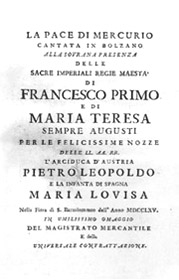
Il consiglio del conte fu seguito, anche con qualche larghezza: l’Accademia si incarnò in una grande cantata a tre voci con orchestra. Tutto fu preparato con grande cura; il destino, purtroppo, non volle però rendere il giusto agli sforzi bolzanini: poco dopo la celebrazione del matrimonio ad Innsbruck, infatti, mori l’imperatore (il 18 agosto); la famiglia tornò precipitosamente a Vienna, disponendo un periodo di lutto con divieto di ogni tipo di manifestazione (danza, musica, teatro). “La Pace di Mercurio” non fu eseguita, né, dato lo strettissimo carattere occasionale del testo, recuperata in altre occasioni; per non vanificare u lavoro fin u svolto, u Magistrato Mercantile dispose l’invio di diverse copie del libretto, più la partitura e le parti staccate, sia a Vienna (dove furono consegnate a Giuseppe II in occasione del suo onomastico il 19 marzo 1766) sia a Firenze, dove Pietro Leopoldo aveva assunto il governo del Granducato, lasciando cosi agli Asburgo un segno concreto e tangibile della propria devozione.
La “Pace di Mercurio” é una cantata, ossia una composizione per voce e strumenti, simile strutturalmente ad un ‘opera, ma di dimensioni più contenute e senza apparato scenico. La musica é opera di Tommaso Traetta (Bitonto 1727— Venezia 1779), compositore di formazione napoletana e di fortuna e fama internazionali (la sua carriera toccò, dopo Napoli e Roma, Parma, Torino, Mannheim, Vienna, Pietroburgo, Londra...), che fu uno dei musicisti che più contribuirono alla cosiddetta riforma del teatro musicale nel secondo Settecento, grazie al felice incontro tra la propria cultura teatrale, napoletana, con quella francese conosciuta a Parma, arricchite entrambe dal contatto con la tradizione tedesca. Traetta fu stimato da Gluck, che del resto anch’egli apprezzava, e da Haydn; quando fu scelto per la composizione della cantata era già affermato (anche a Vienna), era al servizio di Parma (corte borbonica, vicina alla Spagna ma anche agli Asburgo), e aveva qui composto anche Le feste d'Imeneo, «spettacolo teatrale» per il matrimonio del fratello maggiore di Pietro Leopoldo, Giuseppe, con Isabella di Borbone, celebrato a Parma nel 1760.
I cantanti furono scelti con cura: Camilla Mattei (Minerva), veneziana, aveva già alle spalle più di dieci anni di carriera; Andrea Grassi, soprano (Mercurio; castrato, come era normale all’epoca), napoletano, aveva pure esordito negli anni ‘50, e aveva anch'egli un’esperienza notevole ed internazionale; Giuseppe Tibaldi (Marte; 1729 – ca. 1790), bolognese, era un famoso tenore, apprezzato a livello europeo (più tardi cantò, ad esempio, nell’Alceste di Gluck nel 1767 e nell'Ascanio in Alba di Mozart nel 1771). Tibaldi era già ben noto a Vienna, e aveva tra l’altro sostenuto il ruolo di Toante nell'Ifigenia di Traetta del 1763; sempre a Vienna, all'inizio del 1765, era stato Marte nel Trionfo d'Amore, un'azione scenica rappresentata in occasione delle nozze (le seconde, essendo prematuramente scomparsa la prima moglie) di Giuseppe II con Maria Gioseffa di Baviera.

II testo poetico é opera di Zaccaria Betti (Verona 1732 - 1788), personaggio di un certo rilievo all'epoca: membro di almeno una ventina di accademie italiane (tra cui quella degli Agiati di Rovereto), era poeta e letterato, ma scrisse anche di storia, filosofia, geografia, economia... Il libretto ricalca schemi consueti per le composizioni occasionali: parte da un soggetto mitologico e lo carica di significati allegorici e, a volte, smaccatamente contingenti, arrivando a nominare esplicitamente i destinatari dell’omaggio poetico-musicale. I protagonisti sono Minerva, «dea delle Scienze», Mercurio, «dio del Commercio», e Marte, «dio dell’Armi», La cantata si apre con le recriminazioni di Mercurio, che si sente dimenticato e negletto perché gli uomini onorano solo chi si dedica alla guerra (cioè a Marte) o alle scienze (cioè a Minerva), trascurando il commercio (evidentissimo richiamo all'attenzione degli imperiali astanti perché si ricordassero della città di Bolzano, che sul commercio viveva). Minerva e Marte, dopo una serie di battibecchi, lo convincono che la causa di tutto non sono loro, ma Amore, che anzi ormai ha talmente preso piede da scalzare non solo il culto di Mercurio, ma anche il loro: l'unica cosa da fare é recarsi dalla coppia imperiale e accusare pubblicamente Amore. Marte denuncerà l’abbandono delle armi da parte dei guerrieri innamorati, e il fatto che le spade, invece che per combattere, vengano usate per incidere nomi muliebri; Minerva (denuncerà) il fatto che nei Liceo si insegni l’inevitabilità dell'amore e i poeti non cantino più le imprese eroiche di un Ulisse o di un Achille, ma solo le bellezze femminili. La prima parte si conclude con il duetto Minerva - Mercurio in cui i due presagiscono la sconfitta di Amore, Nella seconda parte assistiamo ad un brusco voltafaccia di Marte e Minerva; di fronte alle bellicose intenzioni di Mercurio, i due ritrattano tutto: Amore ha reso il mondo civile, Amore riunisce i popoli, crea nodi che recano prosperità: essi stessi sono diventati déi grazie a lui, Anche l’occasione in cui ora si trovano riuniti é dovuta ad Amore, che ha favorito l'unione del «pregio dell'Austria» con «l’onore de Iberia» e radunato tanti potenti; da questa felice occasione scaturiranno benefici per tutto il mondo e il commercio e le arti risorgeranno. Mercurio, alfine convinto, si rappacifica con Minerva e Marte: a Maria Teresa va il merito di aver reso possibile l’evento, destinato a restituire a Bolzano tutto il suo splendore.

Angela Romagnoli
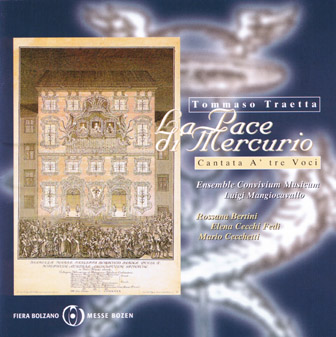
Tratto dal Cd: Tommaso Traetta, La Pace di Mercurio, Rai Sender Bozen. 1997


La Pace di Mercurio
Cantata A' tre Voci
Direttore: Luigi Mangiocavallo
Orchestra: Ensemble Convivium Musicum (con strumenti orginali)

Minerva: Rossana Bertini (Soprano)
Mercurio: Elena Cecchi Fedi (Soprano)
Marte: Mario Cecchetti (Tenore)

Progetto e realizzaione Musicale: Franziska Romaner
Consulenza musicologica: Angela Romagnoli

Produzione: Messe Bozen - Fiera Bolzano e RAI sede di Bolzano


Traetta.com ringrazia il Dott. Reinhold Marsoner, Direttore della Feria di Bolzano per la sua collaborazione.